Destination
Nepal

Quick Contact
Step into a world untouched by crowds and rich in cultural soul on the 15-day Manaslu Circuit Trek, a dramatic Himalayan journey through Nepal’s remote Gorkha region. You’ll circle Mount Manaslu (8,163m) the world’s eighth-highest peak traverse alpine valleys and rugged ridgelines, and conquer the stunning Larke La Pass (5,106m). This trek is perfect for adventurous spirits seeking raw Himalayan landscapes, authentic mountain culture, and fewer footprints. Designed for both experienced trekkers and curious first-timers, this immersive circuit will challenge, inspire, and deeply reward you.
What Makes This Trek Special:
The Manaslu Round Trek is a true Himalayan hidden gem offering the raw wilderness of restricted zones with fewer trekkers and more authentic encounters. With Himalayan Magic Treks, you'll benefit from trusted local guidance, personalized care, and deep regional insight. This is not just a trail it's a cultural corridor where landscapes, faith, and resilience come alive. Perfect for those who crave the road less traveled, yet still want a well-supported, high-altitude adventure.
Embarking on the Manaslu Trek is like stepping into a living Himalayan canvas where every step carries you deeper into Nepal’s remote Gorkha region, tracing ancient trade routes, crossing suspension bridges over wild rivers, and weaving through serene Buddhist villages shadowed by towering peaks. This 15-day Circuit Trek begins in the low-altitude forests and farmlands of Soti Khola, gradually climbing through ever-changing landscapes lush sub-tropical jungles, deep gorges carved by the Budi Gandaki River, and high-altitude alpine meadows nestled below Mount Manaslu (8,163m).
The journey unfolds in distinct phases: from warm hill villages to chilly Himalayan outposts, from forested trails to the stark, glacial beauty of Larke La Pass (5,106m) the dramatic high point of the trek. Along the way, you’ll encounter warm hospitality in rustic teahouses, witness daily life in Tibetan-influenced communities like Jagat, Samagaun, and Samdo, and visit ancient monasteries adorned with colorful prayer flags and spinning wheels. The terrain is diverse but rewarding, and while daily treks average 5–7 hours, the itinerary is paced thoughtfully to allow for safe acclimatization, including a dedicated rest day in Samagaun with optional side hikes to Manaslu Base Camp or Pungyen Gompa.
Our professional team at Himalayan Magic Treks ensures that every detail from transportation to lodging and permits is smoothly arranged, giving you the freedom to immerse yourself in the trail. Whether you're crossing glacier-fed streams or watching golden light hit snow-capped peaks at dawn, this trek will challenge your body and awaken your spirit.
You’ll return not only with photos and footprints but with a deeper connection to nature, culture, and yourself a truly transformative Himalayan adventure unlike any other.
We offer only private trips – meaning your journey is exclusively for you and your group. No strangers will join, allowing you to travel comfortably, enjoy personal attention, and make the trip truly yours. This private experience also gives you more freedom, flexibility, and a relaxed atmosphere throughout the adventure.
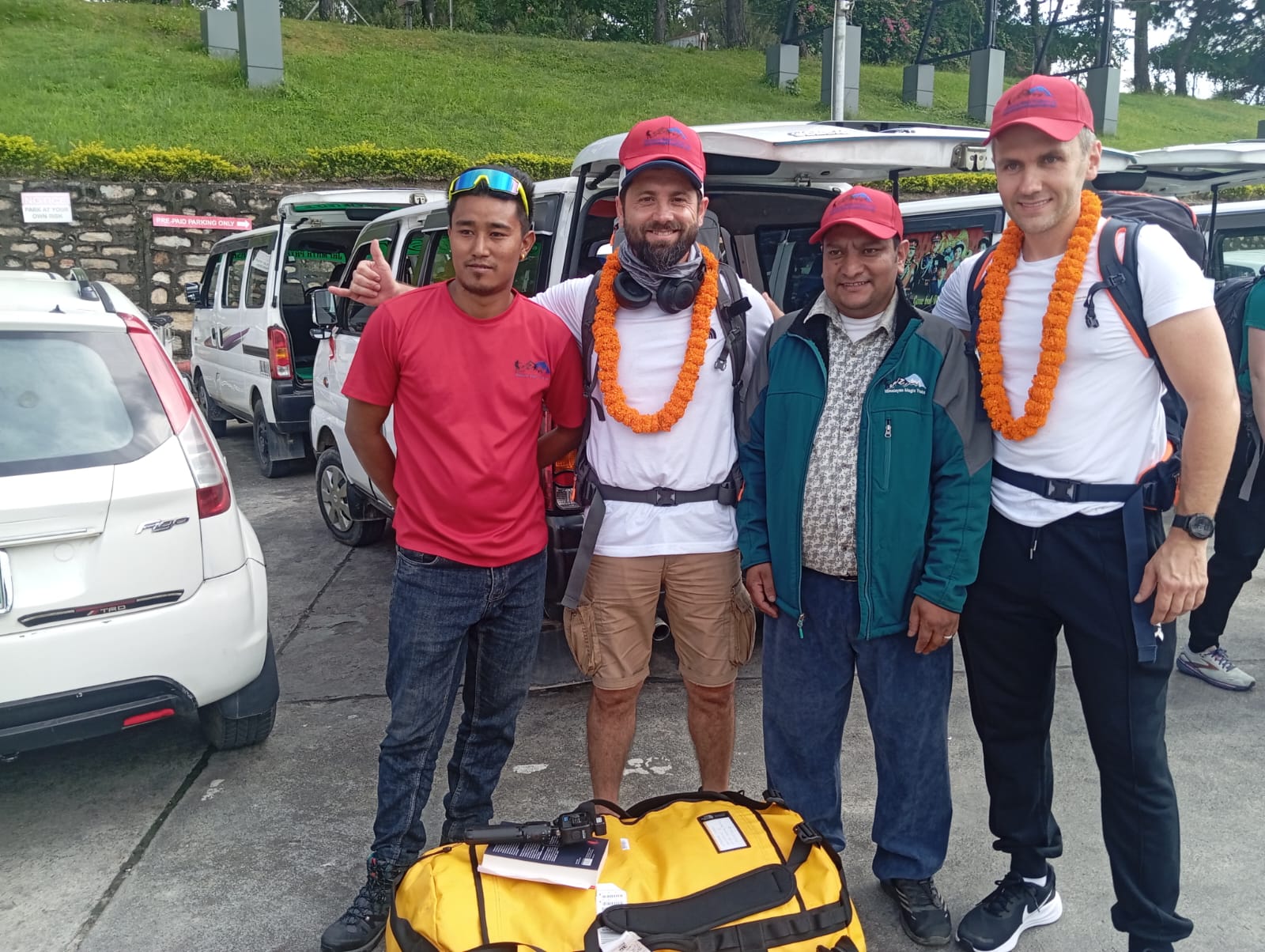
You’ll be greeted upon arrival at Tribhuvan International Airport by a representative from Himalayan Magic Treks and transferred to your hotel in Thamel. Enjoy a brief orientation session and free time to explore the colorful streets of Kathmandu.
After breakfast, begin your scenic drive westward along the Prithvi Highway and then follow the Budi Gandaki River into the hills. You'll pass rural landscapes, terraced farms, and small roadside villages before reaching Soti Khola, your starting point for the trek.
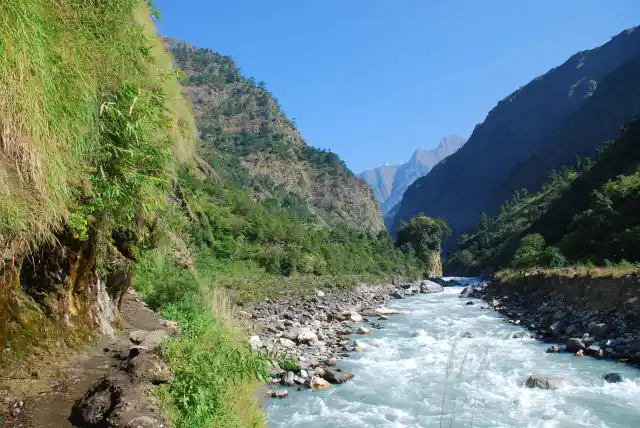
Today’s trek follows a narrow trail alongside the roaring Budi Gandaki River. You’ll walk through shady sal forests, cross small streams, and pass traditional Magar and Gurung settlements before arriving in Machha Khola, a riverside village.
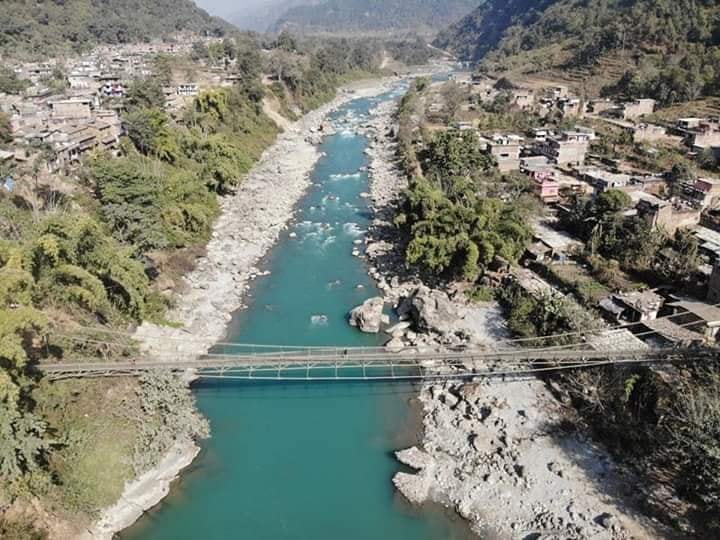
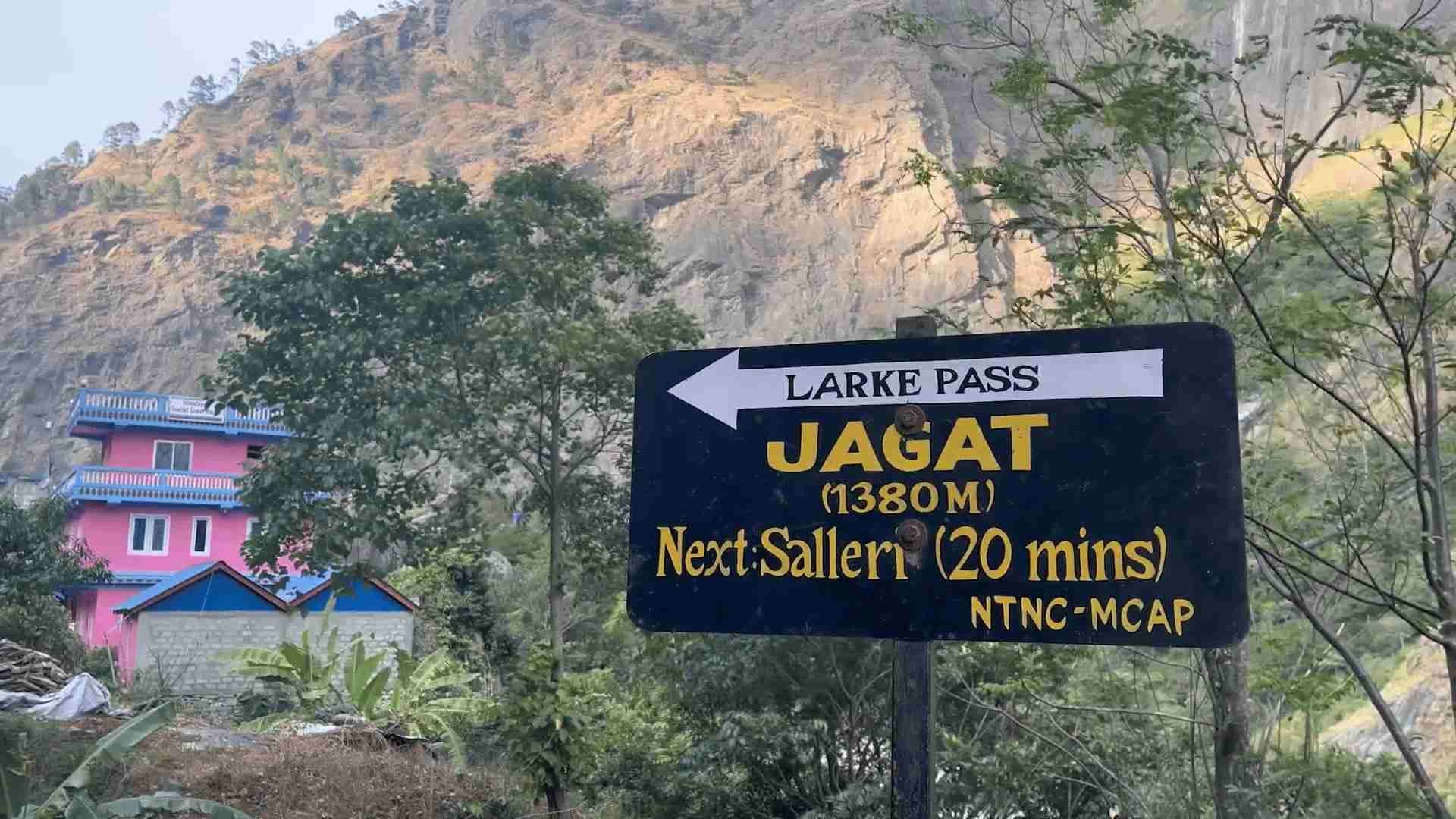
The trail winds through fertile farmland and small hamlets. You’ll cross several suspension bridges and walk through Tatopani, known for its natural hot springs. A gentle climb brings you to Jagat, a well-preserved village with stone-paved lanes and Buddhist chortens.
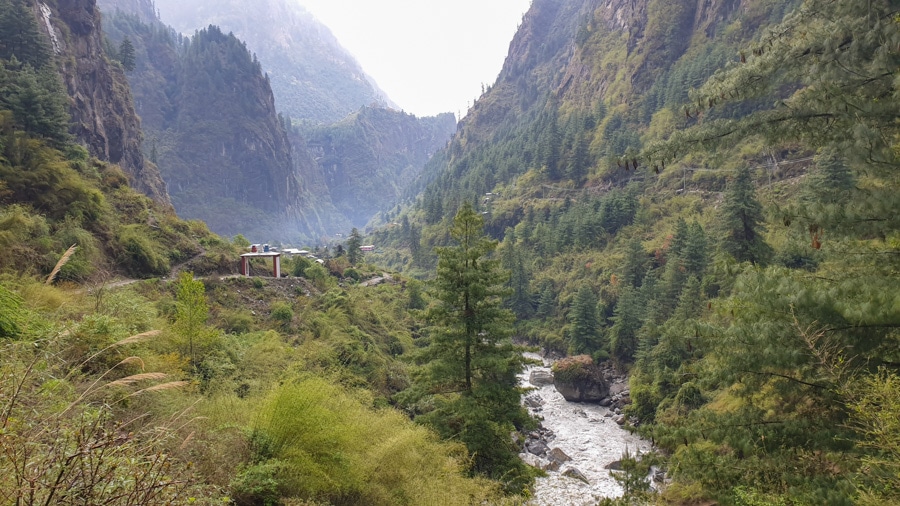
Today you’ll walk through a dramatic gorge, passing waterfalls and pine-covered slopes. The trail enters a region influenced by Tibetan culture. After crossing the river several times, you'll ascend to the quiet village of Deng.
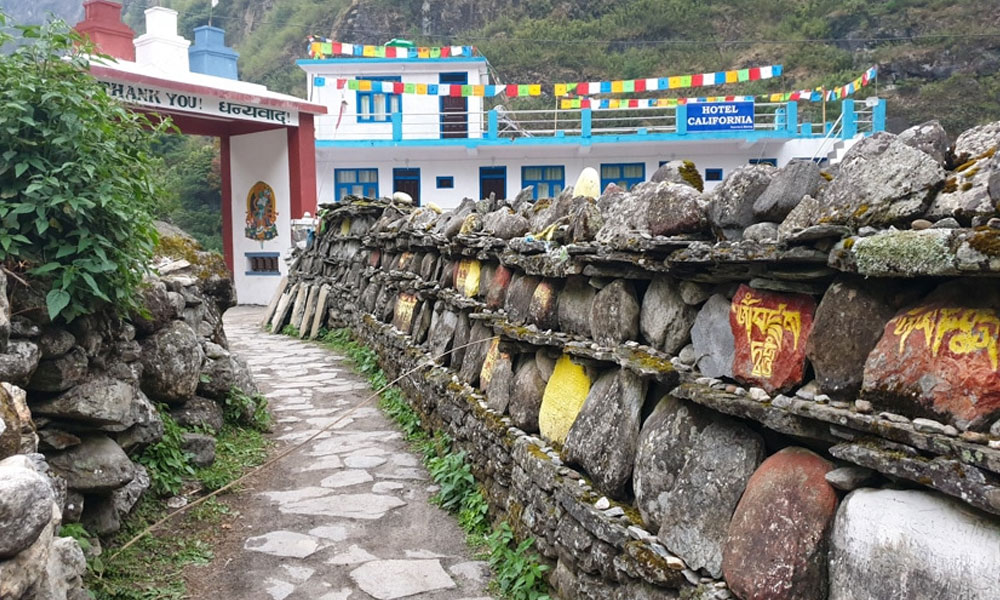
As the landscape begins to open, you’ll enjoy views of snow-capped peaks and encounter Buddhist mani walls and colorful prayer flags. The trail climbs gradually through forested terrain, eventually reaching the charming village of Namrung.
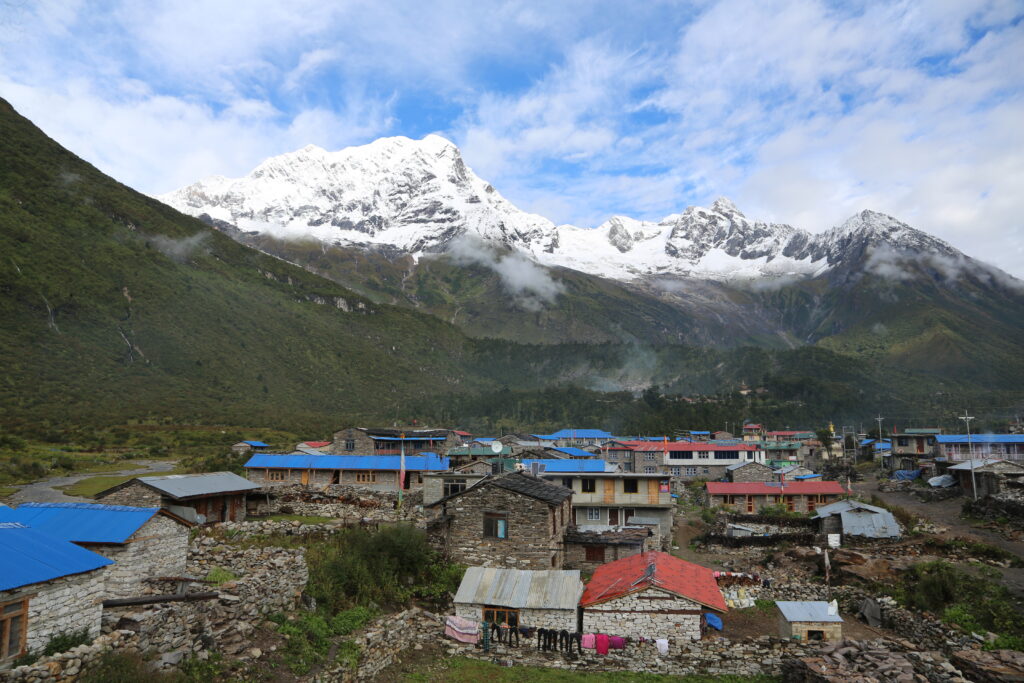
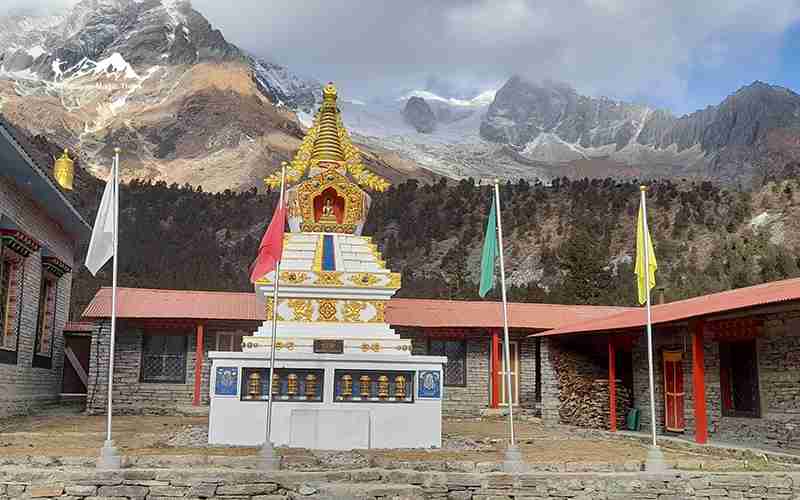
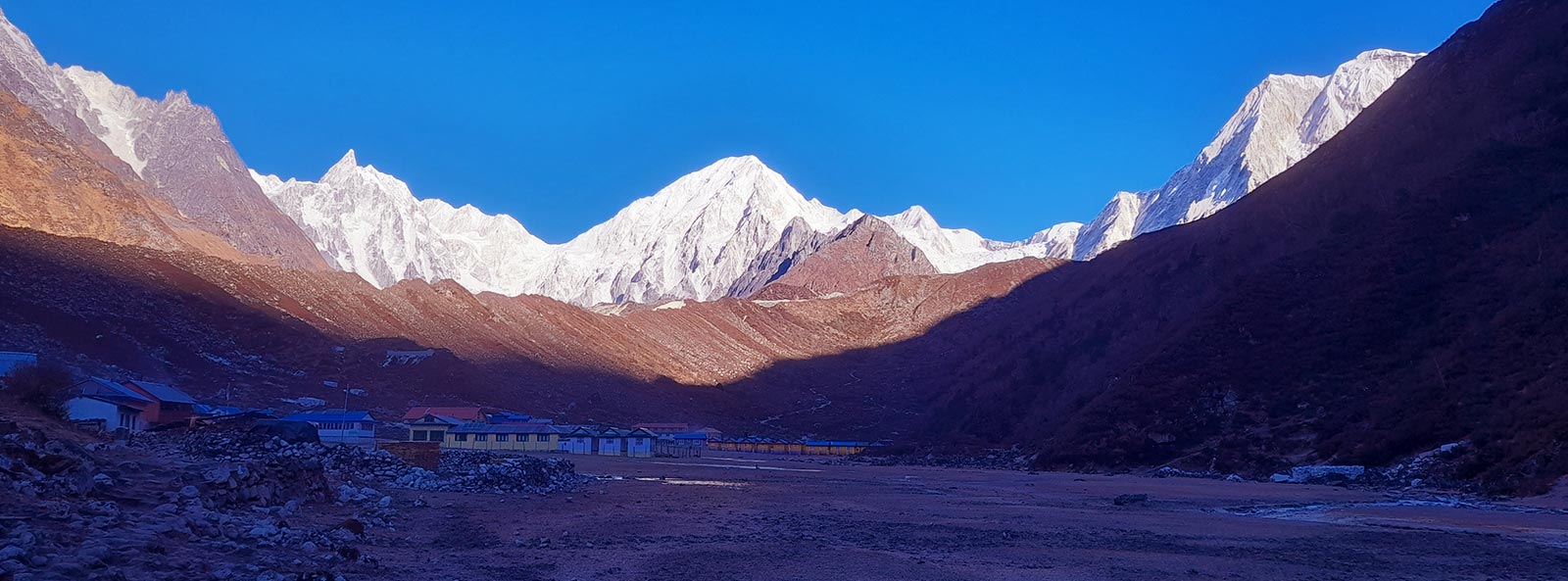
One of the most scenic sections of the trek, today you’ll walk through alpine forests and stone-built Tibetan villages like Lho and Shyala. Towering views of Manaslu, Himalchuli, and Ngadi Chuli dominate the skyline as you approach Samagaun, a picturesque highland settlement.
Today is reserved for acclimatization. You can relax in the village or take an optional hike to Manaslu Base Camp (4,800m) or the serene Pungyen Gompa, offering incredible views and deep cultural insight.
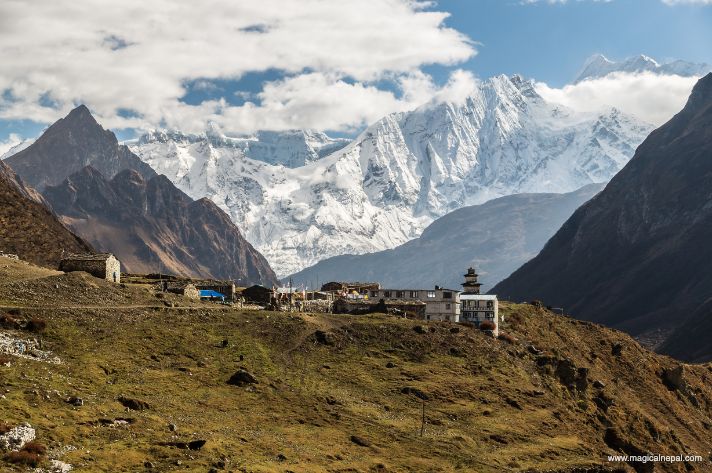
Following the trail northward, you’ll ascend gently along a dry, windswept valley. Views of the Manaslu massif continue to impress as you reach Samdo, a remote settlement near the Tibetan border where traditional lifestyles are still preserved.
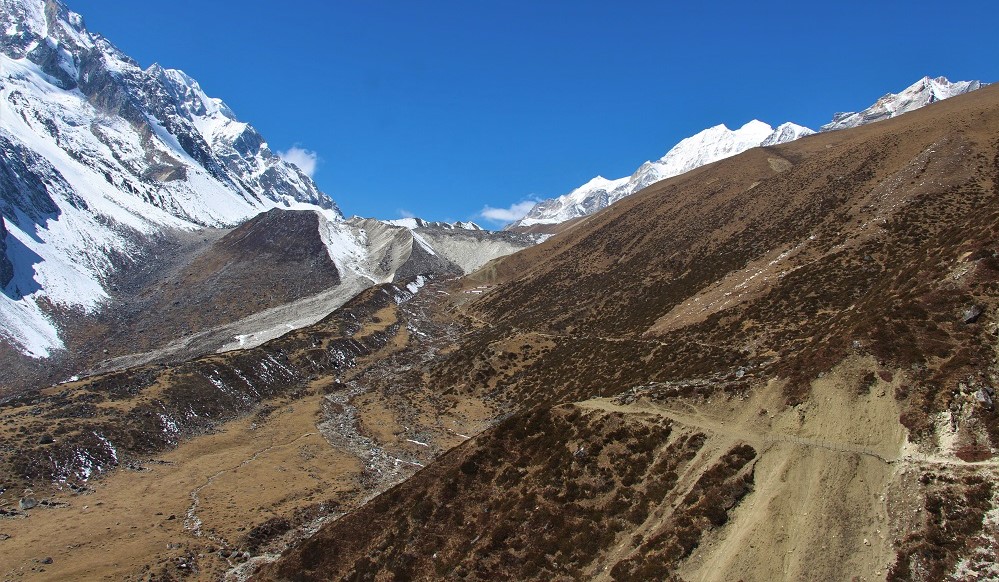
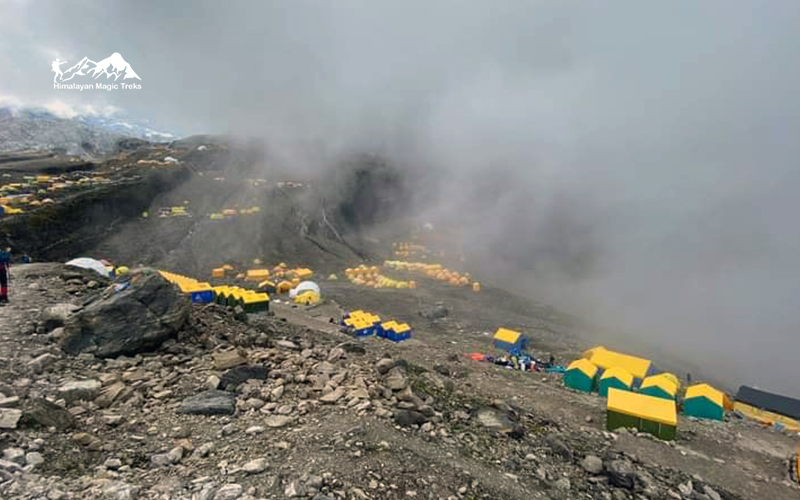
Today’s trail climbs steadily toward Dharmasala, also known as Larke Phedi, the last stop before the pass. The sparse vegetation and increasing altitude will make this a slower but rewarding trek, with stunning views of Larke Peak and surrounding glaciers.
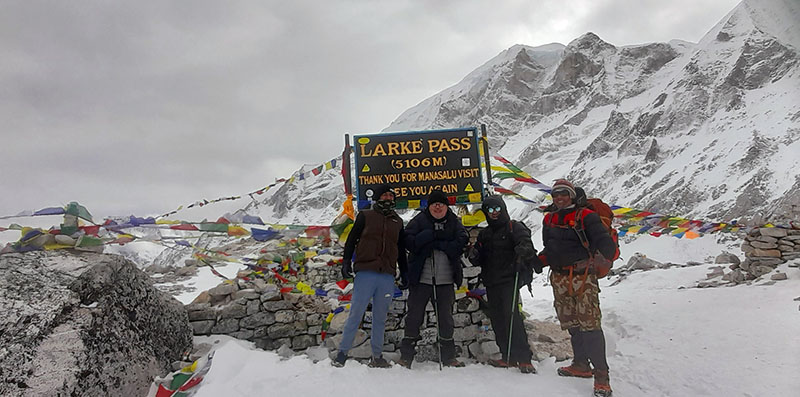
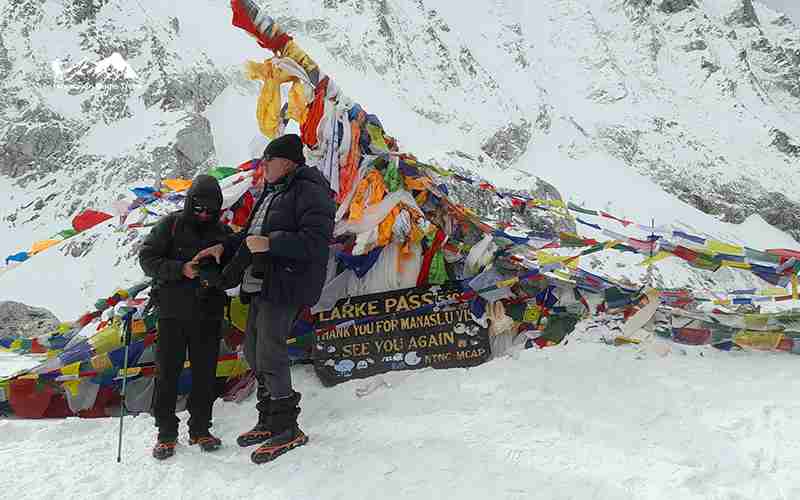
The most challenging and rewarding day of the trek. Begin before sunrise and ascend slowly to Larke La Pass (5,106m). You’ll be surrounded by Himalayan giants, including Himlung, Kang Guru, and Annapurna II. The descent into Bhimthang is long but scenic.
Descending through rhododendron forests and alpine meadows, today’s walk offers a pleasant change in terrain and temperature. You’ll pass through the Gurung villages of Tilije and Tal before reaching Dharapani, where the trek ends.
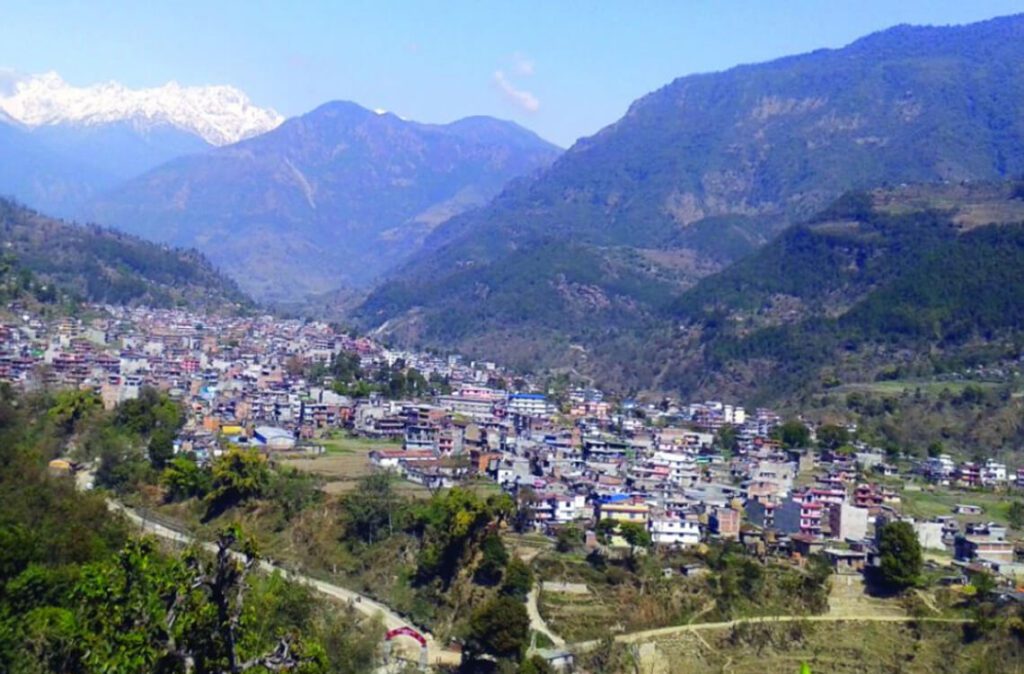
After breakfast, a scenic drive down winding mountain roads brings you to Beshisahar, the gateway town to the Annapurna region. Enjoy your final moments in the hills before returning to urban life.
Today, you’ll travel back to Kathmandu through river valleys and rolling hills. Upon arrival, check into your hotel and enjoy a relaxing evening or last-minute shopping in Thamel.
Your journey in Nepal concludes today. Our team will transfer you to Tribhuvan International Airport for your onward flight, filled with memories of mountains, culture, and newfound friendships.
When planning your Manaslu Circuit Trek Package, understanding the cost, inclusions, and booking process is essential. At Himalayan Magic Treks, we provide transparent pricing based on group size, ensuring you get the best value for your adventure.
| Group Size | Price Per Person |
|---|---|
| 2 Paxes | USD 1150 |
| 3 Paxes | USD 1000 |
| 4 – 6 Paxes | USD 975 |
| 7 – 10 Paxes | USD 950 |
| 10+ Paxes | USD 900 |
Note: Prices are based on a full-board package during the trek. Extra personal expenses (drinks, tips, personal gear, etc.) are not included.
Reserving your Manaslu Circuit Trek Package is simple and secure:
Booking early is highly recommended as the Manaslu Restricted Area Trek requires limited permits, especially during peak trekking seasons (spring and autumn).
During the Manaslu Circuit Trek, trekkers stay in traditional teahouses run by local families. These provide basic yet comfortable accommodation and a warm cultural experience, making the journey both authentic and memorable.
The food in Manaslu Circuit Trek is freshly prepared and hearty, giving you enough energy for long trekking days. Most teahouses serve meals from a fixed menu, which usually includes:
Staying in local teahouses and enjoying authentic meals is one of the highlights of the Accommodation in Manaslu Trek, blending adventure with cultural immersion.
Choosing the best season for the Manaslu Trek is essential for a safe and enjoyable journey. Since this is a high-altitude trek with challenging terrain, the weather plays a significant role in your overall experience. The two most popular trekking seasons in Nepal are spring (March–May) and autumn (September–November), though it is possible to trek year-round with the right preparation.
The Manaslu Restricted Permit is mandatory for all trekkers from Jagat to Samagaun.
This area is protected to preserve its natural beauty and cultural heritage, and trekkers must travel with a registered guide through a government-authorized agency.
The cost varies depending on the season:
September–November (Autumn): USD 100 per person for the first 7 days, then USD 15 for each additional day.
December–August (Spring, Summer, Winter): USD 75 per person for the first 7 days, then USD 10 for each additional day.
The MCAP (Manaslu Conservation Area Project Permit) is required from Philim onwards.
Cost: USD 30 per person (valid for the entire trek).
As the trek route exits into the Annapurna region near Dharapani, the ACAP (Annapurna Conservation Area Permit) is also necessary.
Cost: USD 30 per person.
For the Manaslu Circuit Trek, a TIMS card is not required if you already have the Restricted Area Permit.
In other regions of Nepal, TIMS is mandatory, but here it is replaced by the RAP.
All permits must be arranged in Kathmandu through a licensed trekking agency like Himalayan Magic Treks.
Independent trekking is not allowed in the Manaslu region; a registered guide is compulsory.
You will need to provide passport copies, visa details, and passport-sized photos for processing.
In summary: To trek in this region, you will need the Manaslu Restricted Area Permit, MCAP, and ACAP. Himalayan Magic Treks ensures all required documents are arranged before your trek begins.
The Manaslu Circuit Trek is considered a moderate to challenging trek, making it suitable for trekkers with good fitness levels and prior hiking experience. The journey involves long walking days, steep ascents and descents, and crossing the high-altitude Larkya La Pass (5,160m), which can be physically demanding. Understanding the Manaslu Trek difficulty level helps you prepare both mentally and physically for the adventure.
Daily trekking hours range from 6–8 hours on rugged mountain trails.
The altitude gradually increases, with the highest point being Larkya La Pass.
Trails include steep climbs, rocky paths, and suspension bridges, adding to the challenge.
Prior trekking experience in Nepal or other high-altitude regions is an advantage.
To build the required fitness for Manaslu Trek, it is recommended to start training at least 6–8 weeks before your departure:
Cardio training: Running, cycling, swimming, or brisk walking to improve stamina.
Strength training: Focus on legs, core, and back to handle uphill and downhill trails.
Hiking practice: Multi-day hikes with a backpack to simulate trekking conditions.
Mental preparation: Be ready for long walking days and simple living conditions in remote areas.
Since the trek reaches above 5,000 meters, the risk of altitude sickness in Nepal is real and should not be underestimated. Himalayan Magic Treks designs itineraries with proper acclimatization days for safety.
Walk at a slow, steady pace and stay hydrated.
Avoid alcohol and smoking during the trek.
Follow the recommended acclimatization stops at key villages such as Namrung, Samagaun, and Samdo.
Be aware of symptoms like headache, nausea, dizziness, or loss of appetite. If they worsen, descend immediately.
The Manaslu Circuit Trek offers more than breathtaking landscapes—it provides an immersive journey into the culture in Manaslu region, where traditional villages and Himalayan heritage create a unique trekking experience.
The region is home to Gurung and Tibetan-influenced villages, where traditional stone houses, prayer flags, and Buddhist stupas are common sights.
Trekkers can observe daily life, from farming and herding to local crafts and trade.
Festivals and rituals are often celebrated with vibrant music, dance, and community gatherings.
Numerous Buddhist monasteries and gompas along the route offer insight into Tibetan Buddhist practices.
Colorful prayer flags line trails, bridges, and rooftops, symbolizing peace, compassion, and good fortune.
Respecting local traditions, such as removing shoes before entering a monastery and greeting locals politely, is essential.
Politeness and respect go a long way—always ask before photographing people or sacred sites.
Tipping is customary for guides, porters, and lodge staff, reflecting appreciation for their service.
A small gesture of sharing snacks or gifts with children or local families is appreciated but not obligatory.
Efficient transport for Manaslu Circuit Trek is essential to start and complete your journey smoothly. From Kathmandu to the trailhead and onward to the Annapurna region, Himalayan Magic Treks provides clear guidance on travel options and connections.
The trek usually begins from Soti Khola, which is approximately 7–8 hours by road from Kathmandu.
The route passes through scenic valleys, terraced fields, and local villages, offering a glimpse of rural Nepal.
Tourist bus: Affordable and convenient, but may be crowded and slower due to stops and road conditions.
Jeep: Faster than the bus and more flexible, ideal for smaller groups or those seeking comfort.
Private vehicle: Offers maximum convenience and flexibility, perfect for families or custom itineraries.
Note: Road conditions vary, especially during the monsoon, and vehicles may be 4x4 or local jeeps depending on the season.
The Manaslu Circuit trek ends at Dharapani, which is a key entry point to the Annapurna Circuit.
From Dharapani, trekkers can continue their journey along the Annapurna trail or return to Kathmandu via jeep or bus.
This connection allows adventurous trekkers to combine multiple trekking routes in one trip, enhancing the overall Himalayan experience.
With reliable transport options from Kathmandu to Soti Khola and onward connections via Dharapani to Annapurna, logistical planning for the Manaslu Circuit Trek is straightforward, allowing you to focus on the adventure ahead.
Choosing the right trekking company can make all the difference on your Manaslu Circuit Trek. At Himalayan Magic Treks, we combine local expertise, safety, and personalized service to ensure a memorable and worry-free journey.
Our team of experienced local guides brings in-depth knowledge of the Manaslu region, its trails, culture, and communities. They are trained in first aid and high-altitude trekking protocols, ensuring your safety throughout the trek. Guided by their expertise, you will not only navigate the challenging terrain with confidence but also gain insights into the fascinating history and culture of the villages you pass.
Safety is our top priority. Himalayan Magic Treks maintains an excellent safety record, including proper acclimatization schedules, emergency evacuation plans, and reliable communication systems in remote areas. Every trekker receives thorough pre-departure guidance, from gear preparation to altitude sickness prevention, so you can enjoy the adventure with peace of mind.
We also understand that every traveler has unique needs and preferences. That’s why we offer flexible departures and custom itineraries, accommodating solo trekkers, families, or groups with specific timeframes and interests. Whether you want a standard Manaslu Circuit Trek or a combined route with Annapurna, we tailor the itinerary to maximize your experience.
By trekking with Himalayan Magic Treks, you are choosing the best trekking company in Nepal, combining professionalism, local knowledge, and personalized attention to make your Manaslu adventure truly unforgettable.
The trek is considered moderate to challenging. It involves long walking hours, steep ascents, and crossing high-altitude terrain at Larkya La Pass (5,106 meters). A good level of fitness and prior trekking experience are recommended.
The best times are autumn (September to November) and spring (March to May). These seasons offer clear skies, pleasant weather, and ideal trekking conditions.
Yes, you’ll need:
No, solo trekking is not allowed. You must be part of a group with at least two trekkers and a licensed guide, as per government regulations.
The highest point is Larkya La Pass at 5,106 meters (16,752 feet).
The trek follows a teahouse style, providing basic but comfortable lodging with shared rooms and communal dining areas.
You can enjoy a variety of meals, including dal bhat (rice and lentils), noodles, soups, pasta, and local Tibetan bread. Vegetarian options are widely available.
Yes, altitude sickness is a possibility. The itinerary includes acclimatization days to minimize the risk. Staying hydrated, ascending gradually, and recognizing symptoms are important.
A reasonable level of physical fitness is required. Training with cardio exercises, hill climbing, and strength workouts for a few weeks before the trek is highly recommended.
On average, you’ll trek 6-8 hours daily, depending on the day's itinerary and terrain.
Yes, you can purchase bottled or boiled water at teahouses. Using a water purification system or tablets is recommended to reduce waste and ensure safety.
Yes, the trek passes through villages with Tibetan-influenced culture. You’ll visit monasteries, gompas, and chortens, and experience the lifestyle of the Tamang and Tibetan communities.
Yes, travel insurance is essential. It should cover high-altitude trekking and include emergency evacuation by helicopter.
The trek offers a mix of breathtaking landscapes, high-altitude adventure, cultural experiences in remote villages, and fewer crowds compared to the popular Annapurna and Everest regions.
Response Time 0-2 Hours , Response Rate 100%
You may also like
Begin On The 13 Days Annapurna Base Camp Trek. Explore Diverse Landscapes, Vibrant Villages, And Majestic Himalayan Peaks. A Journey Of Adventure And Unforgettable Memories Awaits! View Details →
Embark On The Ultimate Everest Base Camp Trek With Himalayan Magic Treks. Explore Sherpa Culture, Breathtaking Himalayan Vistas, Sagarmatha National Park, And Iconic Landmarks In This 14-day Unforgettable Journey To The Heart Of Mount Everest. View Details →
Experience The 10-day Langtang Valley Trek With Himalayan Magic Treks. Explore Kyanjin Gompa, Glacier Views & Tamang Culture In Nepal's Pristine Highlands. View Details →


 30 minutes drive
 Standard Hotel
 Dinner